


 Subscribe
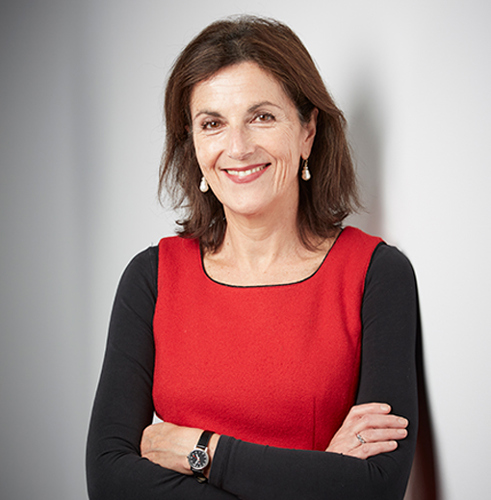
Can you share a bit about your career journey and how you came to join the Harbour Trust?
I have had a varied career journey across the private and public sectors and academia, in Australia and overseas. I began as an architect in private practice and then with the NSW Government Architect where I quickly developed a passion for public work. I went on to work in a large international practice in New York for several years where I was immersed in the regeneration of various redundant industrial waterfront sites across the US and UK. The opportunity to reactivate these places and return the foreshores to the public proved transformational. This experience was pivotal in my career journey encouraging me to expand my horizons when I returned to Sydney.
After a stint with the City of Sydney developing a range of urban projects leading up to the Sydney Olympics, I established my own practice. I combined university teaching with a practice that focused on government clients and public work. This led to a range of projects, and master plans around the harbour including Walsh Bay, The Rocks, Ultimo and Pyrmont, all places with extraordinary industrial heritage and waterfront locations.
After 10 years in private practice, the offer to re-imagine the Homebush Bay Olympic site post-Olympics was a new challenge that encompassed new icons and valued heritage such as Newington Armory, the nature reserve and wetlands. The opportunity to shape policies and plans through projects and delivery was a major drawcard that steered me into various senior roles in government where I led a range of public projects, many significant heritage places around Sydney Harbour.
My career pivoted again, after a reflective fellowship at Harvard, this time to UNSW Sydney, as Dean of the Faculty of Built Environment and later Pro Vice-Chancellor, Precincts providing the opportunity to shape the development of the new UNSW Health Translation Hub at Randwick and the new UNSW city campus in Canberra. I also continued my professional engagement through project advisory and capacity building in Asia and the South Pacific. Much of this work entailed urban regeneration challenges and complex strategies balancing heritage conservation, adaptive reuse and renewal with economic development, displacement and gentrification.
So, it was a privilege to be appointed to the Australian Heritage Council where I was involved in listing some of our most significant heritage places and addressing the hurdles to protection and ongoing stewardship. This led me back to Sydney Harbour and my appointment to the Harbour Trust which seems the perfect place to land to bring all this experience together.
What did you study or train and how does this influence your role as a Member of the Trust?
I originally trained as an architect and then went onto study landscape and then urban design in New York as I was passionate about improving the public realm and quality of life in our cities. Serendipitously this led to working on a range of large urban regeneration projects. Most of these were gritty redundant working waterfronts, with a combination of extraordinary settings and industrial heritage, not unlike some of our Harbour Trust sites. These places resonated with me as I had been involved in the conservation movement in Sydney as a student, lobbying to protect some of our oldest waterfront neighbourhoods, The Rocks and Millers Point, Woolloomooloo and Cowper Wharf. I believe our environment is core to our shared understanding of our cultural heritage.
With a keen interest in the built and natural environment, I became engrossed in how we maintain and adapt our heritage to engage current and future generations. At the Harbour Trust we have an opportunity to shape peoples’ experiences and an understanding and appreciation of all of these.
Are there any books, films or experiences that significantly influenced how you think about heritage and public spaces?
Jane Jacobs’ seminal book The Death and Life of Great American Cities and the definitive film Citizen Jane: Battle for the City about the clash between this grass-roots urban activist and New York city planner Robert Moses. It chronicles their epic 1960s David-and-Goliath battle over the preservation of Greenwich Village from the threat of the Lower Manhattan Expressway. It was a precursor to the urban conservation movement and Sydney’s Green Bans. It shaped my view that we can all affect change and that we need to be actively engaged to do that.
Another influential 1960s book was Ian McHarg’s book Design with Nature. It introduced an ecological approach to landscape planning and design that is attuned to natural systems. It informed my design ethos particularly around valuing and working with what exists. This approach is also very aligned with First Nations practice and contemporary sustainability practice and climate resilience planning.
What has been the most defining moment of your career so far?
I have had many extraordinary opportunities and moments in my career. Although some of the small moments are the sweetest.
With hindsight, being given the opportunity to lead the planning and design of transformational city-shaping urban projects early in my career was key to my appreciation of complexity and the possibilities this brings.
Rallying support for worthy programs is a recurrent theme. The Sydney Spaces program I curated at the City of Sydney produced speculative concepts for the city’s streets, squares and parks, that led to a $200m investment in city improvements and community facilities in the lead up to the Sydney Olympics.
During the devastating 2020 bushfires, as president of the Australian Institute of Architects, I helped mobilise several thousand architects to provide pro-bono support communities to build back better through Architects Assist.
And as the first female Dean of my UNSW Faculty, I initiated Engaging Women in the Built Environment, a platform to support women in architecture, design and construction. It connected thousands of women, promoting their diverse career pathways and achievements, and generated continuing support through internships and scholarships, research and industry partnerships.
However, the most rewarding moments are the ones where you are bailed up by a former student or colleague, years later, and told about the impact you had on their careers. That’s pretty special.
What is your vision for the future of the Harbour Trust and its destinations?
We have a portfolio of extraordinary and diverse destinations around Sydney Harbour, but many are not widely known or visited. We need to do more to reveal our many hidden gems and make these destinations come alive in peoples’ imaginations through compelling narratives and experiences that engage them when they are there and stay with them when they leave.
The wealth of stories within the Harbour Trust sites from the First Nations connections, through to colonial, military and maritime histories provide a rich backdrop to the built heritage and natural environment of Sydney Harbour. While there are various relevant precedents such as Brooklyn Navy Yard and Governors Island in New York City, that provide valuable lessons, our opportunity is to uncover our own stories and what is quintessentially Sydney.
Is there a lesser-known spot at a Harbour Trust destination that holds personal meaning to you?
I love different places for different reasons. As a keen bush walker, Middle Head / Gubbuh Gubbuh and North Head Sanctuary engage on many levels, the stunning headland views, local ecologies, bird life and deep connection to Country you feel when you walk this land. I also love that you can finish with a saltwater swim nearby. What’s not to love about that?
In contrast, and lesser known, is the fascinating military history both above and below ground you can find along the way. The underground tunnels at North Head Sanctuary are really something to experience, quite unexpected and a stark reminder of wartime Sydney in this otherwise pristine setting.
Which recent project or initiative by the Harbour Trust are you most proud of and why?
The master plans for the major Harbour Trust sites, North Head Sanctuary, Middle Head / Gubbuh Gubbuh and Cockatoo Island / Wareamah are all excellent, but Cockatoo Island’s plan is a standout for its potential to amplify an already layered history from pre-colonial through to its extraordinary shipbuilding industrial heritage. Having loved the big events such as the Biennale and celebrating New Year’s Eve with family at Cockatoo Island / Wareamah, it will be great that the everyday experiences will be enhanced and complemented with contemporary uses and attractions. It will be wonderful to see the old slipway adapted for swimming and kayaking. It adds new layers to this extraordinary place.
What upcoming Harbour Trust project or initiative are you most excited about?
The development of the slipway at Cockatoo Island / Wareamah. A safe place to swim in the Parramatta River will be a boon to this part of the city.
What role does tourism play in what the Harbour Trust sets out to do?
It’s fundamental. Promoting and sharing these extraordinary places, their unique stories and the experiences they offer with all visitors to Sydney, not just Sydneysiders, is a must. Today’s travellers are increasingly seeking authentic, distinctive experiences. With so many different destinations around Sydney Harbour all with different attributes to draw on, we have so much to offer. With careful stewardship and curation, our opportunity is to make these places and the visitor experience the best we can. Quality presentation and interpretation that brings these places and their histories alive, and everyday activation, programming and events, which is engaging and memorable, should draw people in and wanting to return.
What advice would you give someone to start a career in heritage management or conservation today?
A curiosity in the world around you and an interest in its history is a good beginning. Today’s natural, built and social fabric is tomorrow’s heritage. Most people do not start in conservation or heritage management but arrive there. There are many diverse paths that lead to a career in conservation such as studies in ecology, history, archaeology, architecture, urban planning or hands-on experience such as volunteering, bush regeneration and grass-roots activism. These can all lead to careers in conservation or heritage management. It’s a complex multi-disciplinary domain to engage in and everyone can find a niche with passion, focus and care for conservation of our collective heritage. No one career path is the right one.
The Members of the Trust are non-executive members appointed by the Minister for the Environment and Water. In accordance with the Sydney Harbour Federation Trust Act 2001, this body consists of 8 members including the Chair as well as 2 members recommended by the NSW Government, one representing the interests of First Nations peoples and another who provides a local government perspective and experience. To see the full list of members, click here.
