


 Subscribe
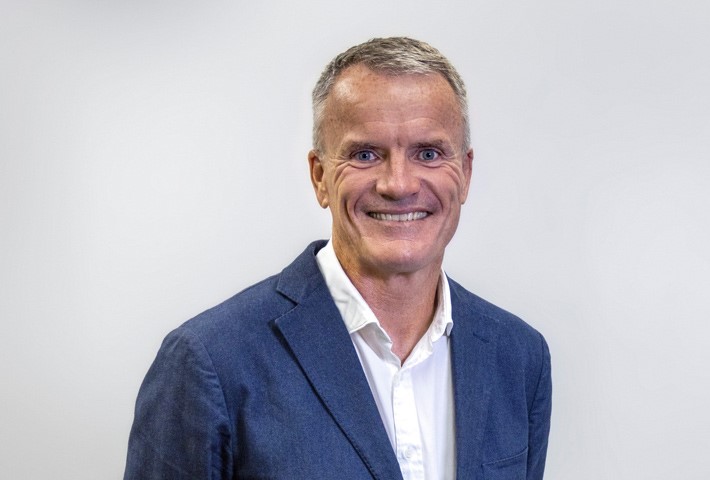
Can you share a bit about your career journey and how you came to join the Harbour Trust?
I'm one of 2 members who were appointed in consultation with the NSW government. I was recommended to the Australian Government because I had previously been the Chief Executive of the NSW Environment and Heritage agency. Interestingly, I was contacted while I was still the Executive Dean of Sciences and Engineering at the University of Tasmania. We’ve returned to live in NSW in the past year.
I also have a longer link back to the Harbour Trust having been the preparer of the Australian Convict Sites World Heritage nomination when I worked for the Australian Government.
What did you study or train and how does this influence your role as a Member of the Trust?
Initially, I studied a science degree. While my study was primarily ecological, I went on to do a Masters of Business and then a Masters of Public Policy. It's really the combination of these 3 degrees that have influenced my thinking and role as a Member of the Trust.
The business and public policy degrees help me understand what needs to be done and how you can do that within government. But I think, like many people, my first degree has been very influential. Understanding the destinations, particularly their ecological values, is incredibly important.
Are there any books, films or experiences that significantly influenced how you think about heritage and public spaces?
I think the writings of Aldo Leopold – an American forester, philosopher and writer – have been important. Leopold understood the need for a caring relationship between people and nature.
Additionally, I regularly re-read the philosophy of Bill Neidjie. Bill, in his book Kakadu Man spoke of the connection to Country he, as a senior lawman, had with Kakadu. We were lucky enough to live in Kakadu and spend time with Bill. His deep knowledge and philosophical teaching were profoundly influential on my understanding of heritage and culture – and the two together being a manifestation of people in the landscape.
What has been the most defining moment of your career so far?
I’ve been lucky enough to work in areas like World Heritage, national park management, Aboriginal cultural heritage protection, private land conservation, energy, water and the tertiary education sector… but it’s the people I’ve got to work with and learn from who have defined my career. So, it is less a role but a way of working that has been influential.
Early on in my work life, I was guided/mentored by a couple of incredible people who stopped to think about what we were doing and why. They did this to challenge me to use evidence in decision making and not to pursue evidence to support the decision you thought should be made.
What is your vision for the future of the Harbour Trust and its destinations?
The Harbour Trust is one of the more unique organisations in Australia. In that regard, it manages sites that tell an incredible part of the national story. There's an enormous opportunity to support people to experience our destinations and better understand their stories.
So, my vision for the Harbour Trust is that its sites are accessible to all Australians and that people get to spend time understanding the rich, complex and layered history of a relatively small geographic area. Harbour Trust experiences speak to the time before colonisation, give us an understanding of colonisation, reflect the local impact of our defence services, showcase change through industrialisation and – of course, today – provide a ‘playground’ and a new cultural connection to the greatest harbour city in the world.
Is there a lesser-known spot at a Harbour Trust destination that holds personal meaning to you?
As an ecologist, the Eastern Suburbs Banksia Scrub community at North Head Sanctuary in Manly is of special interest. It is one of the wonderful spots where you can contemplate the harbour prior to 1788.
However, the sandstone, convict-built silos on Cockatoo Island / Wareamah are extraordinary on many levels – yes, due to their construction but also they represent the challenge of feeding the colony and the remote decision making of England. I first visited the silos while preparing the Australian Convict Sites World Heritage nomination and their story is incredible.
Which recent project or initiative by the Harbour Trust are you most proud of and why?
The Greenway wall restoration project at Macquarie Lightstation in Vaucluse is an exceptional piece of restoration work for which the community and the Harbour Trust should be exceptionally proud. Not only is the work done to the highest possible standards, but it’s also been incredibly well planned, thought through and delivered. The ability to interpret the site and to share experiences with visitors is an outstanding contribution to understanding the past.
What upcoming Harbour Trust project or initiative are you most excited about?
The activation of Cockatoo Island / Wareamah through the conversion of the slipways for swimming and kayaking is a standout. No doubt it will be complex and difficult to deliver but the team is up to the work and the community benefits will be extraordinary.
I can’t think of a better place for a day visit to experience, understand, have fun and recreate on Sydney Harbour.
What role does tourism play in what the Harbour Trust sets out to do?
When I think of tourism and the role of the Harbour Trust’s work, I think less about tourism and more deeply about what is the experience people should be enjoying when they visit Harbour Trust destinations.
For me, the tourist experience is built on awareness, knowledge and understanding in the context of a stunningly beautiful harbour. Awareness that creates inquiry and knowledge that is gained, so that people leave with an understanding.
So, while tourism’s support for the economy is incredibly important, the Harbour Trust plays a critical role in creating awareness, knowledge and understanding.
What advice would you give someone to start a career in heritage management or conservation today?
You’ve made a great choice. There are so many aspects to heritage and/or conservation management that you will be challenged by and you will be fulfilled at work until you retire… and then you’ll keep being involved because there is so much you will be able to contribute to the community.
One thing not to forget is that heritage is framed by what we have experienced and been taught, so there are many views on what is and isn’t important. Notably, having deep discussions about what is and isn’t important from a range of perspectives is the most important thing you can do – to truly represent and protect what the community values.
The Members of the Trust are non-executive members appointed by the Minister for the Environment and Water. In accordance with the Sydney Harbour Federation Trust Act 2001, this body consists of 8 members including the Chair as well as 2 members recommended by the NSW Government, one representing the interests of First Nations peoples and another who provides a local government perspective and experience. To see the full list of members, click here.
